
A few weeks ago, I was sitting in my comfy chair early in the morning, coffee in hand, reading an article about sleep. It talked about how deeply our health is shaped by what happens at night — immune strength, emotional regulation, memory, nervous system repair, even longevity.
None of it surprised me.
Not because I’ve studied sleep formally — but because I’ve studied my children for over 30 years.
Children tell the truth about the body if you’re willing to watch.
The article emphasized something sleep research is now very clear on: the hour before bed matters. Light exposure, emotional tone, nervous system state, and connection all shape whether the body actually enters restorative sleep or simply loses consciousness.
As I read, I found myself drifting back through years of watching this play out in my own home.
The nights the opera ran late
When my first three kids were young, they were involved in several Dallas Opera productions. Rehearsals were long. Performances often went late into the night. Most of the children in those productions had to wake up early the next morning for school.
Because we homeschooled, mine didn’t.
And something unexpected happened.
As the weeks went on, kid after kid in the cast started getting sick. Sore throats. Fevers. Exhaustion. Bugs that wouldn’t go away.
My kids didn’t.
Not once.
When I look back now, I can count on one hand the number of times my first three children were truly sick.
It wasn’t because they lived in a bubble. They were in co-ops, sports, music competitions, youth government, church, constant activity.
But one thing was protected.
Night.
No matter the season, our evenings softened. There was reading. Sometimes I read out loud. Sometimes they read to themselves. There was talking. There was prayer. There was quiet.
Their bodies were allowed to land.
Modern sleep research now confirms what I was witnessing in real time: consistent, regulated sleep strengthens immune function, supports emotional regulation, and lowers long-term stress load. During deep sleep, growth hormone is released, tissues repair, the brain clears metabolic waste, and emotional memories are integrated. Without it, the body stays in low-grade survival.
Sleep is not passive.
It is active healing.
Piles of books, dark rooms, and nervous systems that needed safety
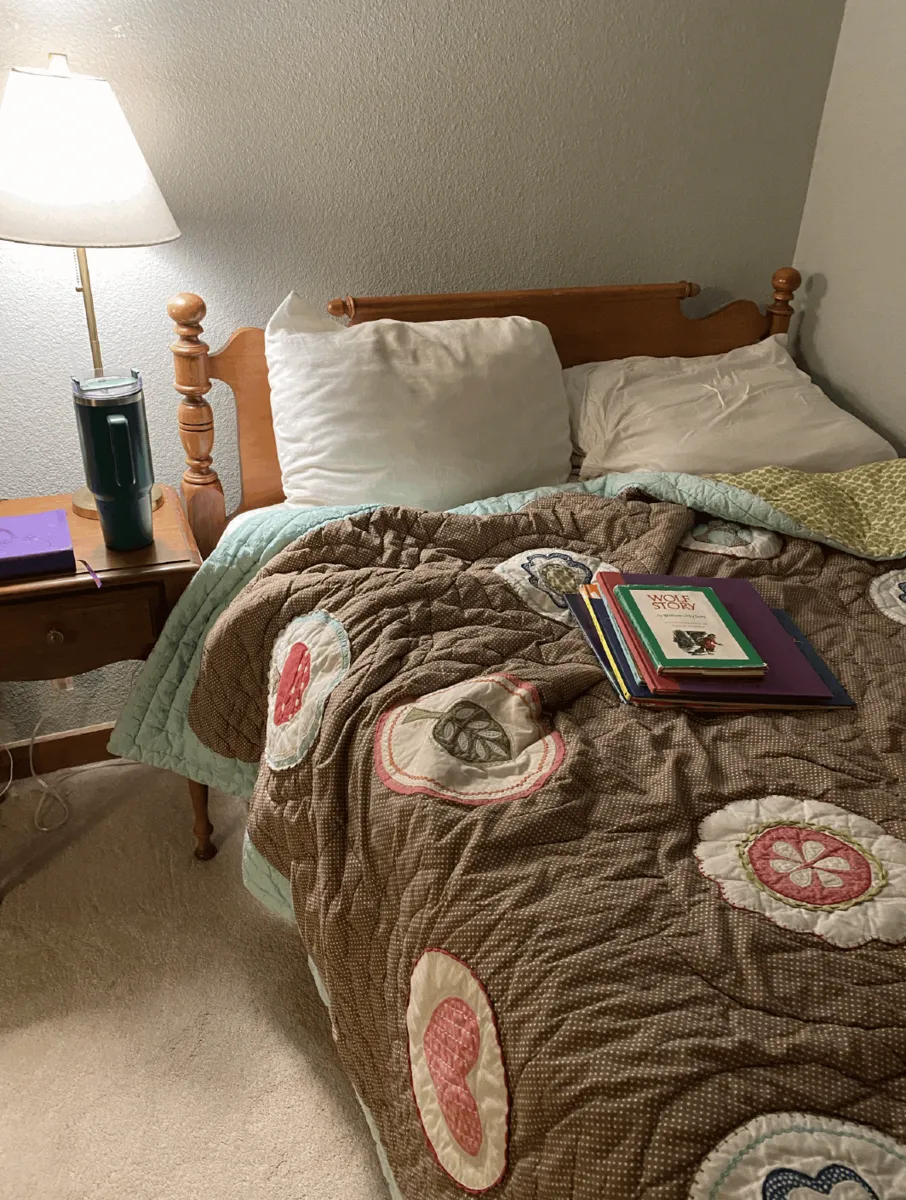
There were countless nights when my young ones — all the way up to age twelve — would pile into the youngest one’s bed with stacks of picture books… or the massive hardback Chronicles of Narnia collection that is literally holding together by a thread now.
Those nights weren’t efficient.
They were regulating.
Today, my youngest is eleven. She’s fifteen years younger than her siblings and has a different father, which has made her childhood emotionally very different. She’s active, athletic, and by all appearances “tired” at the end of the day.
And yet…
The nights leading up to her being away from me can still take over an hour
Lights out. Stories told in the dark. Prayers whispered. Long pauses. More stories. More prayers.
Until her body finally softens enough to sleep.
Daytime exhaustion is not the same as nervous-system safety.
This is why understanding cortisol and the amygdala on a cellular level, not just an educational one, is so important. When a child anticipates separation, change, or emotional uncertainty, the brain’s threat center becomes more active. Cortisol rises. The body stays alert — even when it is tired.
And in those moments, facts don’t help.
Schedules don’t help.
Even chemistry doesn’t really help.
A safe, present, loving human is what helps.
This is why I don’t believe chemical sleep aids heal sleep in the long run. They can make a body pass out. But passing out is not the same as restorative sleep.
And it doesn’t answer the deeper question the nervous system is asking at night:
Am I safe? Am I held? Do I belong? Am I lovable?
Connection is not emotional fluff.
Connection is biology.
And biology determines sleep.
What bedtime is really teaching the nervous system
At night, stimulation fades. Defenses lower. The nervous system surfaces what the day never had space to hold.
So bedtime in our home isn’t just about getting unconscious.
It’s about helping the body feel safe enough to rest.
We talk about what her day felt like — not just what happened, but what her body noticed. We pray — sometimes with her own words, sometimes with Scripture when words are hard to find. And then we listen.
What thoughts came? How did your body feel? Does that thought sound like the character of God… or something else?
I’m teaching her to recognize what brings peace versus what brings pressure. To notice sensations as information instead of problems. To experience God’s presence not as an idea, but as something her body can settle into.
Neuroscience now confirms what Scripture has always reflected: loving presence regulates the nervous system. Eye contact, voice tone, attuned listening, and safe touch activate the vagus nerve, lower cortisol, and allow the brain to move out of threat and into restoration.
Which means bedtime connection isn’t extra.
It is therapeutic.
Night as a generational choice
When I look back over my life as a mother, one truth stands out clearly:
The nights we protected changed the days we lived.
Sleep didn’t just make my kids healthier.
It made them steadier. It softened our home. It taught their bodies repair instead of survival.
And that is generational healing.
Because children don’t just learn what we say.
They absorb what we live.
They absorb our nervous systems.
Our pace. Our tension. Our way of settling. Our way of coming down at night.
If we want to raise children who know how to rest, regulate, listen to their bodies, and live from peace instead of pressure — night is one of the first places to begin.
Not with perfection.
But with presence.